
THE HAVASU FALLS HIKING GUIDE
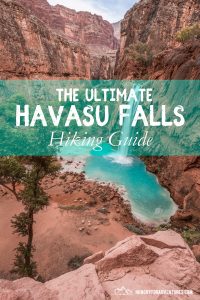
Do you agree that being able to go to Havasu Falls is absurdly hard to do?
As of 2017, visitors have more options to book their Havasu Falls permit to visit the beautiful waters of Havasu Creek.
In this Havasu Falls Hiking Guide, I will be explaining all the information I know from my personal experiences to help you make your reservation as well as plan your hike to Havasupai
Page Content
Faqs | My Trip | Permit | Direction | Hiking | Camping/Lodging | Packing List | Helicopter | Pack Animals
SEASONS
 The best season to visit Havasupai and Havasu Falls is before the monsoon season. April and May are the best months to go in my experience. The hike is not bad, and the water remains pristine and blue. Early mornings and nights can be as cold as 50-60 degrees Fahrenheit. Mid-day can be around high 70-80 degrees Fahrenheit. Summer days can reach up to 115 degrees Fahrenheit.
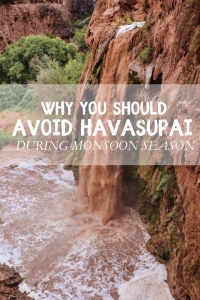
Monsoon season takes place from July to September. Unpredictable rain and flash floods may occur during monsoon season. This will cause restrictions in camp spots, trail blockage, and murky brown waters.
Check out this article with photos of Havasu Falls during monsoon season.
The only worries you will have in the fall and winter are the cold temperatures, but some days are warmer than others. Low’s can reach about 17 degrees Fahrenheit depending on the weather. Snow may be present in the winter.
PERMITS
 Permits are required for camping at the Havasupai campground and the charge is per overnight stay. Getting a reservation at the lodge will allow you to be in the area as well.
If you’re not sure you want to adventure on a Havasu Falls hike, maybe these photos of Havasupai’s 5 amazing waterfalls will convince you.

DIFFICULTY
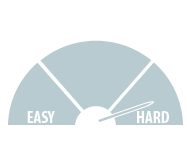 Hiking to Havasu Falls can be a challenge for most people. However, you can choose how difficult you want the hike to be. The reason why is because the Havasupai tribe offers many services to ease your hike into Havasu Canyon.
Navigating the trail is very easy. However, the distance and heat is where the challenge lies. You will be following the canyon for the entire trail. Once you get to the check-in station in Supai Village, they will hand you a map with locations to the waterfalls. Just watch your step once you get to Mooney Falls – it is a 200-feet or more drop off of the cliff. The only part that requires some trail awareness is from Mooney Falls to Beaver Falls.
More info if you want to get to the Havasu Creek and Colorado River confluence will be posted soon.

IMPORTANT THINGS TO KNOW ABOUT HAVASU FALLS AND THE HAVASUPAI TRIBE
QUICK FAQs ABOUT THE HAVASUPAI TRIBE
- The Havasupai Tribe are natives to Havasu Canyon; you will be entering Native Indian reservation land.
- The established village is called Supai Village.
- Tourism is the main source of revenue. A lot of the money is spent on enhancing the area to better hikers’ experiences.
QUICK FACTS ABOUT THE HAVASU FALLS AREA
- Havasu Falls is formed from Havasu Creek that runs into the Colorado River.
- You may have seen similar pictures of Havasu Falls that does not look exactly like the same waterfall. This is due to weathering and flash floods over time.
- Havasu Canyon is a branch off of the Grand Canyon, but it is not part of the Grand Canyon National Park.
- After passing Beaver Falls a few hundred meters, you will enter the Grand Canyon National Park. There is a checkpoint that is monitored by a ranger.
- Fishing is prohibited on reservation territory. You can fish Rainbow Trout after passing the checkpoint on the way to the confluence.
- No day hiking is allowed to Havasu Falls
- You can bring more guests than your reservation limit only if there is a no-show or cancellation. If there is a no-show or cancellation for the day, people without reservations can enter with an increased fee.
My Fourth Trip to Havasu Falls
Havasu Falls is a desert oasis hidden in the canyons of Northern Arizona. If there’s one thing that Arizonan’s can brag about, it’s having Havasu Falls in their backyard. Tthere are 5 major waterfalls in the Havasu Canyon that are formed by Havasu Creek. Havasu Falls is the most known waterfall due to it’s more picturesque landscape.
A Havasu Falls hike is an experience you need to embark on! When you first look at pictures of Havasu Falls, you’re wondering, “Is that even real?” or “How can anything look like that in the desert?” I can tell you first hand that the pictures do not lie. The mesmerizing turquoise, blue-green color of Havasupai is the real deal. The color of the creek comes from calcium and magnesium particles in the waters of Havasu Creek.
I hiked down to Havasu Falls for the fourth time in October 2017. This was my first time ever visiting Havasupai in the fall season and luckily the weather was perfect. The low was mid 45’s and high’s were low 80’s.
Havasupai was thriving! I’ve never seen Havasupai thrive as much as I did this time around. Small details have changed the landscape and it made for a refreshing view of the waterfalls.
Descending Down into Havasu Canyon
Our group drove out from Phoenix at night and arrived at the Hualapai Hilltop parking lot at about 1:30 am. 8:30 pm was the official time we woke up and started the hike down into Havasu Canyon. By the time we got to the wash, there was still shade.
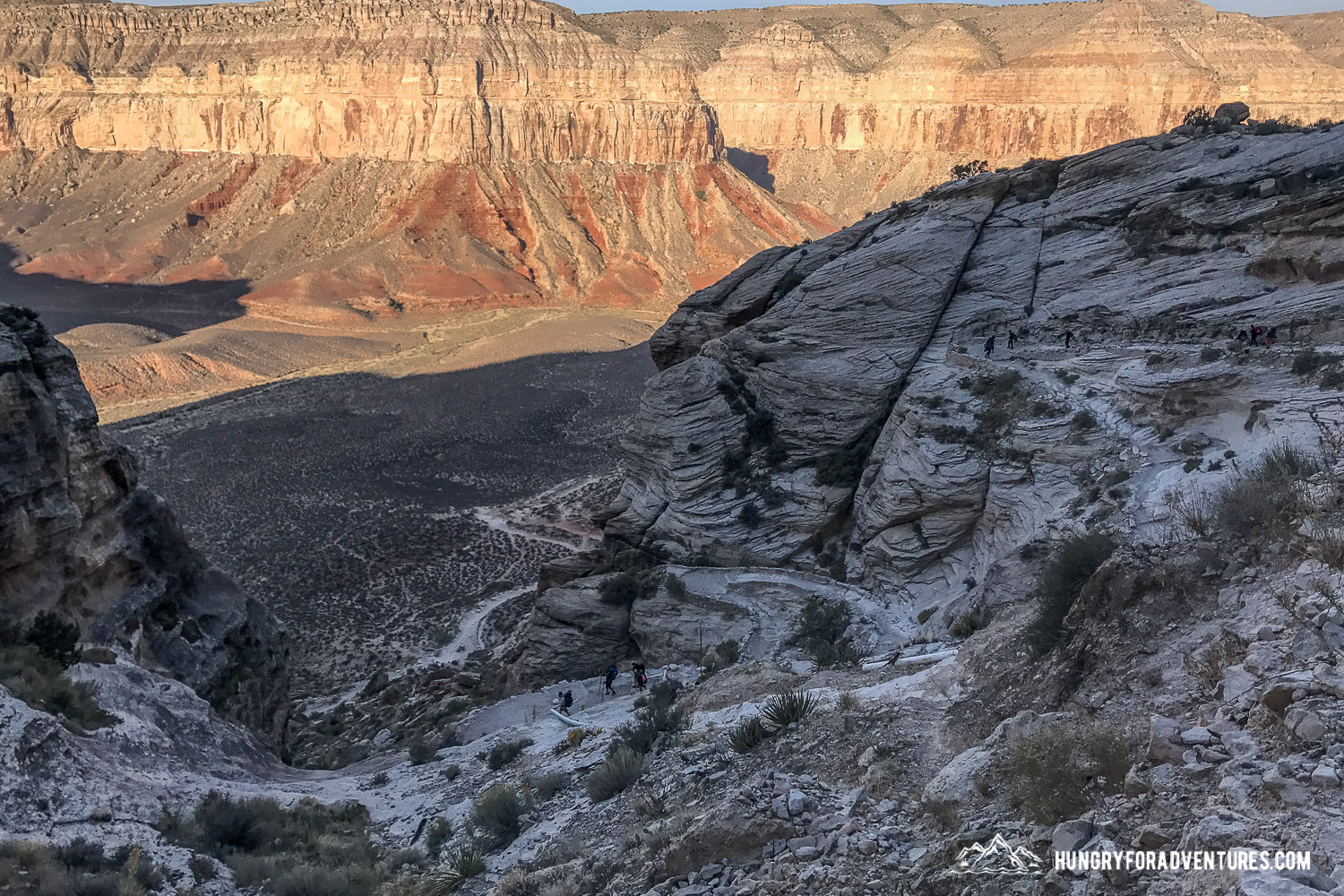
I did not hire the pack animal service. All of my camping gear was stuffed in my 65-liter backpack.
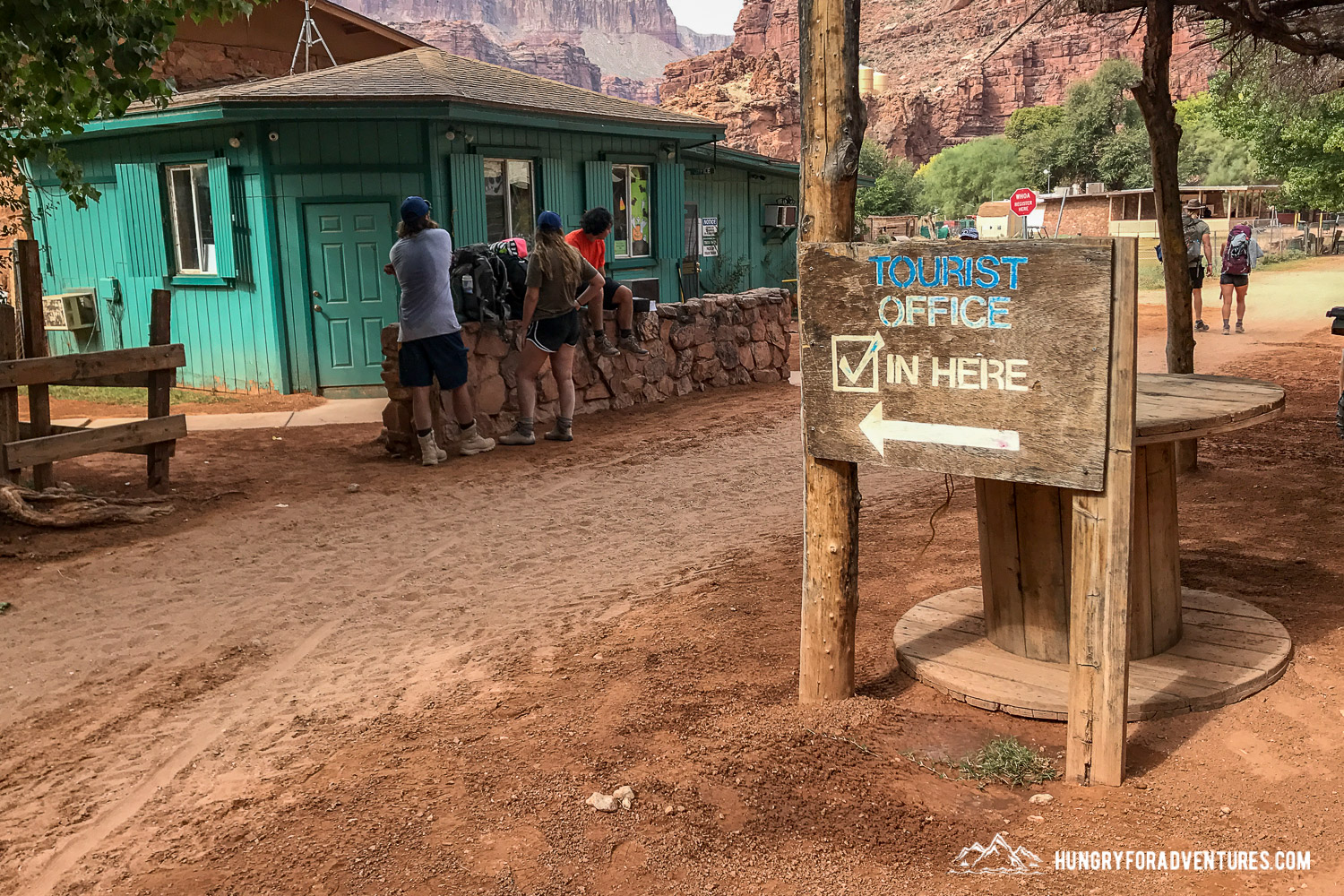
Supai Village in Havasupai Indian Reservation
The hike into Havasupai felt extremely longer than usual to get to Supai Village. From the Hualapai Hilltop parking lot to Supai Village, the hike is quite boring. Being our fourth time, I think we were extremely bored of this scenery. However, we got to Supai Village at about 12:30 pm and checked-in to get our wristbands and tent tags.
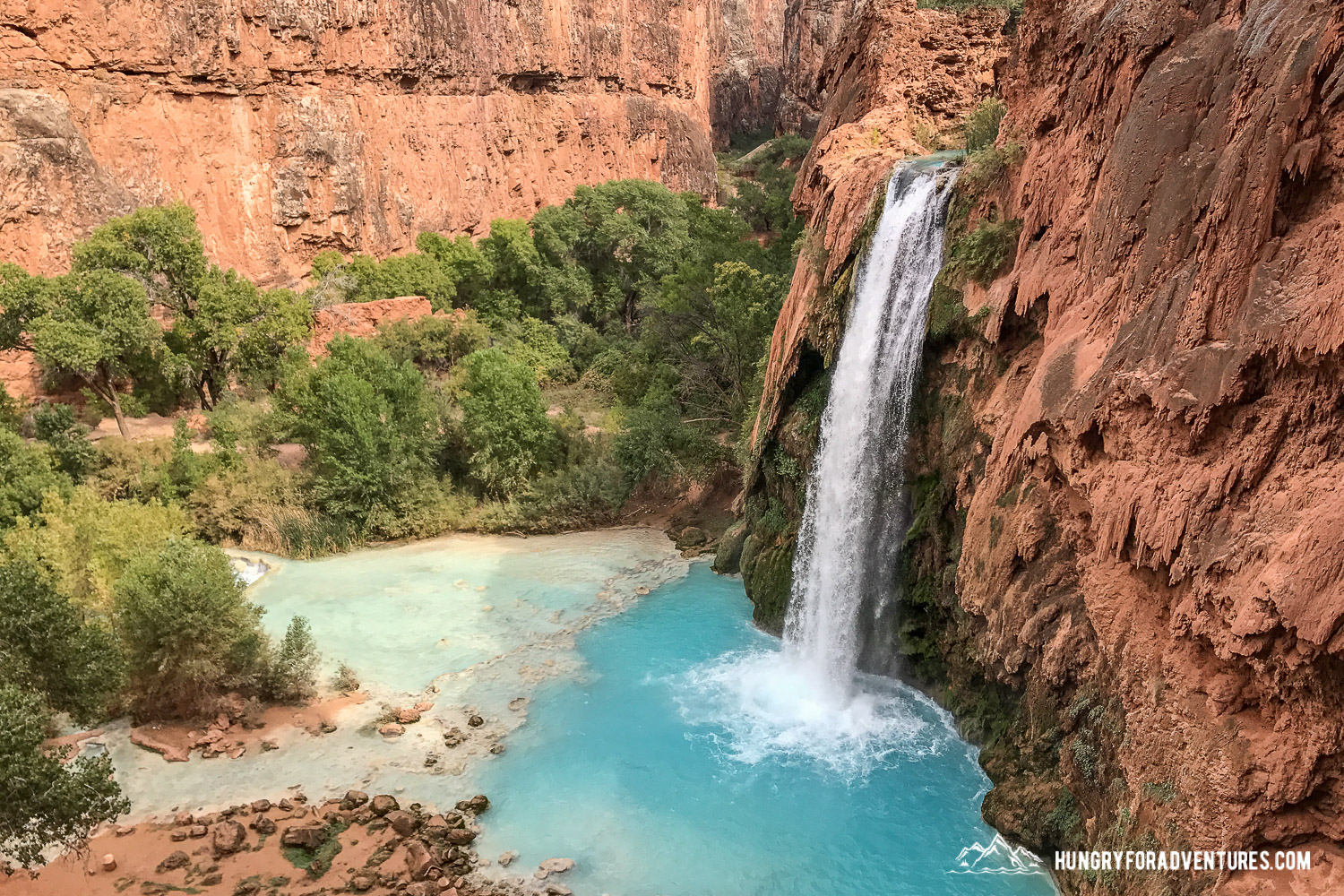
As tired as we were, we wanted to get to the campgrounds as soon as possible to secure a good campsite. So we pushed two more miles to reach the campgrounds. After the first mile in, we were greeted with the refreshing sounds and views of Little Navajo Falls. Soon after, we reached the final decline accompanied to the right by the famous Havasu Falls. It’s always a rewarding feeling getting to this point.
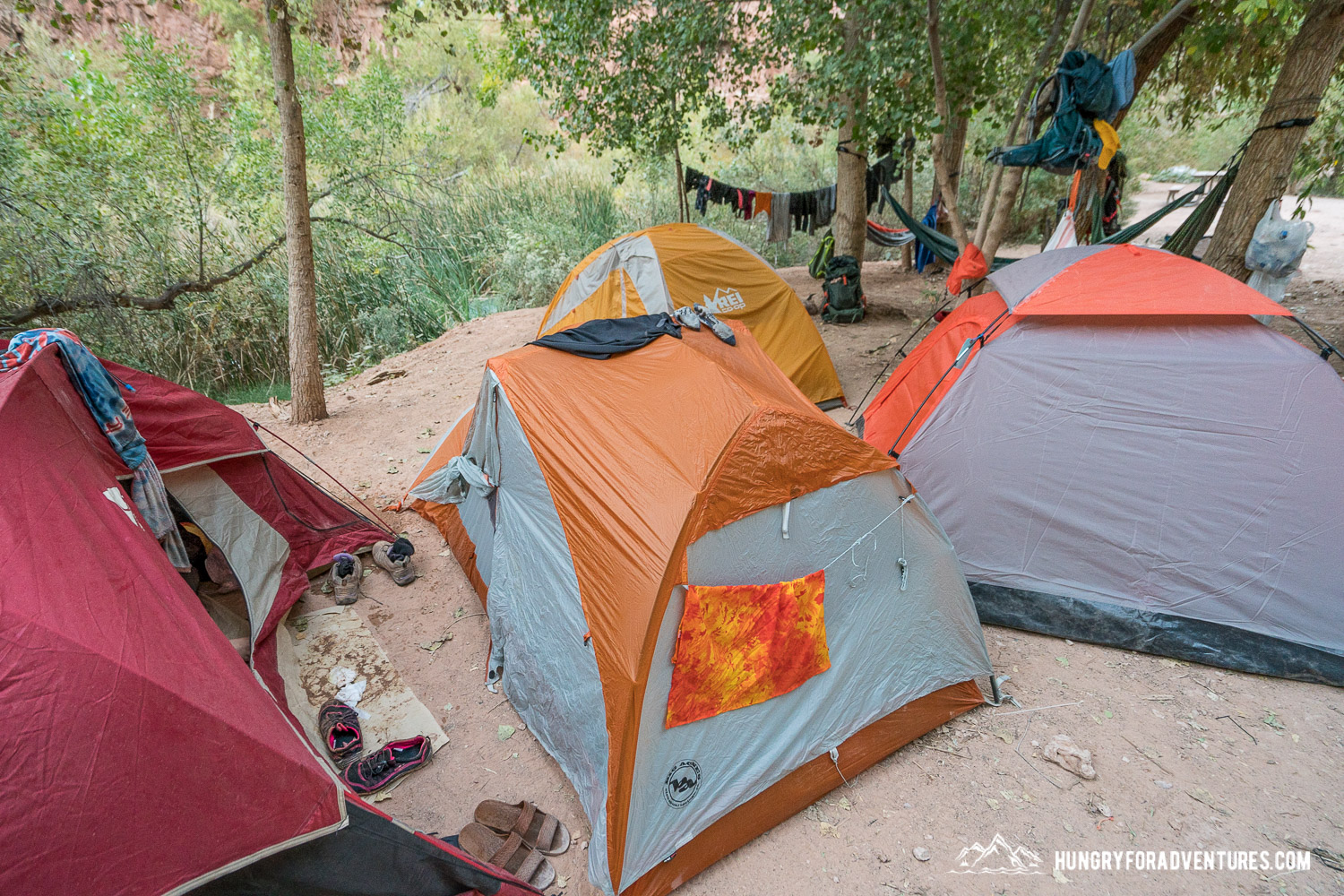
Setting up at the Havasupai Campgrounds
After another half mile, we reached the Havasupai Campgrounds and set up camp in a nice area about 30 yards from the water spigot.
Havasu Falls Campground Tip: The prettier campsites are in the back towards Mooney Falls, but you’re further away from the water spigot. If you have a water filter, then you don’t have to worry about the water spigot.
Enjoying the Water at Havasu Falls
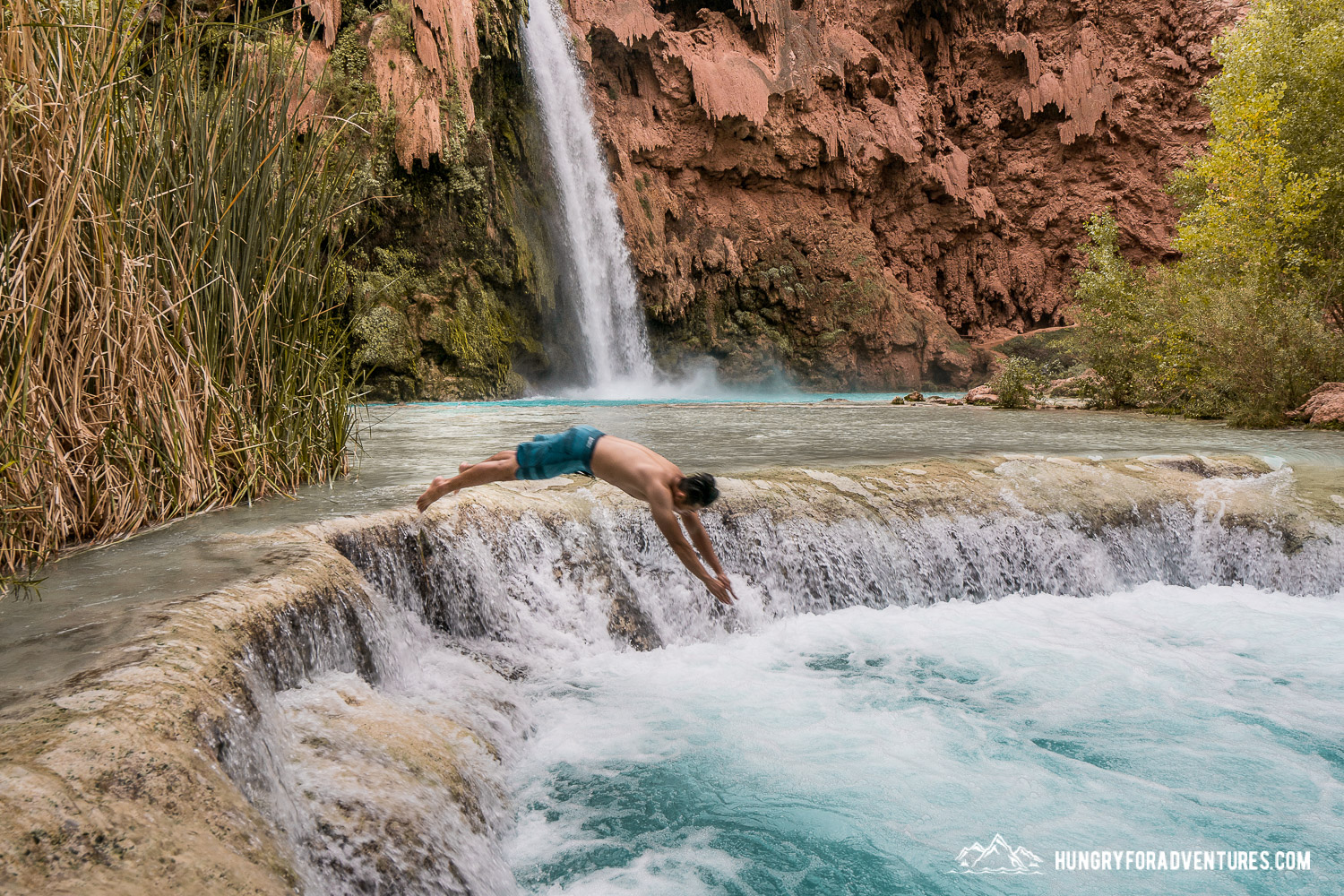
Once we were done setting up at the Havasu Falls Campgrounds, we headed back over to Havasu Falls. Finally, we were able to enjoy the fresh water of Havasu Creek. We refreshed ourselves with a nice swim, climbed a small bouldering route, and cliff jumped at Havasu Falls.
Climbing Down to Mooney Falls
Day 2 started with a 200 feet, extremely vertical decline to Mooney Falls where we hung out for about 40 minutes. I always start early to avoid the crowd. Sometimes heavy traffic may cause a delay of 20 to 30 minutes.
Hike to Beaver Falls in Havasupai
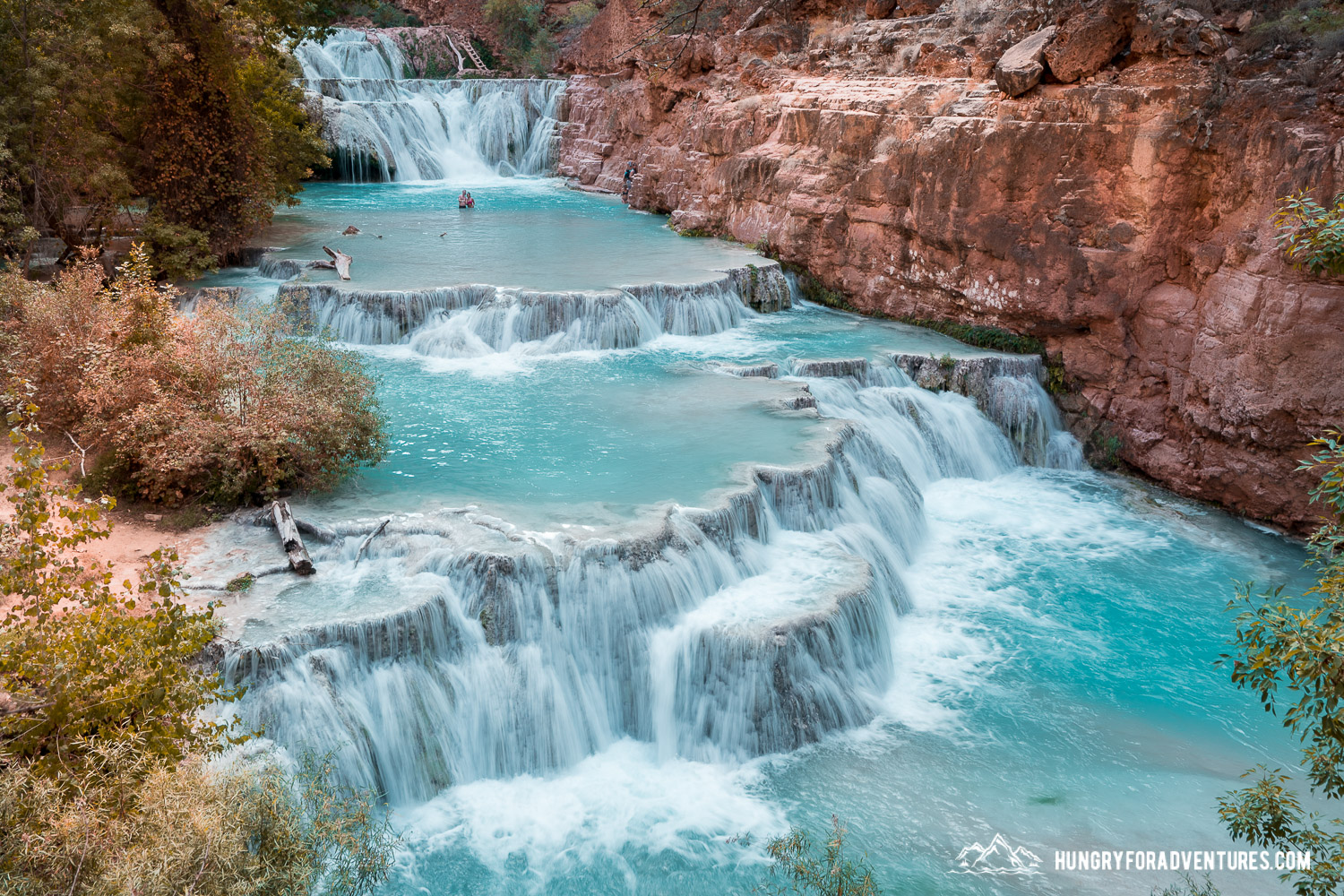
Then our 3-mile hike to Beaver Falls began. This is the best part of the entire hike. We walked through a trail of green shrubs that seemed like a scene from Jurassic Park. The walk is in a very green scenery with Havasu Creek nearby the entire time. Occasionally, a family of mountain goats will appear like they did this trip.
At times, we had to cross Havasu Creek. There are multiple paths to get to Beaver Falls, so don’t get scared if it feels like the path is not correct. Just follow Havasu Creek down.
Our group was one of the first group to get to Beaver Falls, and we had it all to ourselves for a good hour. We ate lunch, swam around, and enjoyed the epic landscape.
Back Towards Mooney Falls
Our group left Beaver falls around 2 pm to head back to Mooney Falls. We took a few detours with an awesome view, and soon enough we were back to Mooney Falls.
Thank you to whoever made this rope swing, we indulged in its awesomeness.
Departure from Havasupai
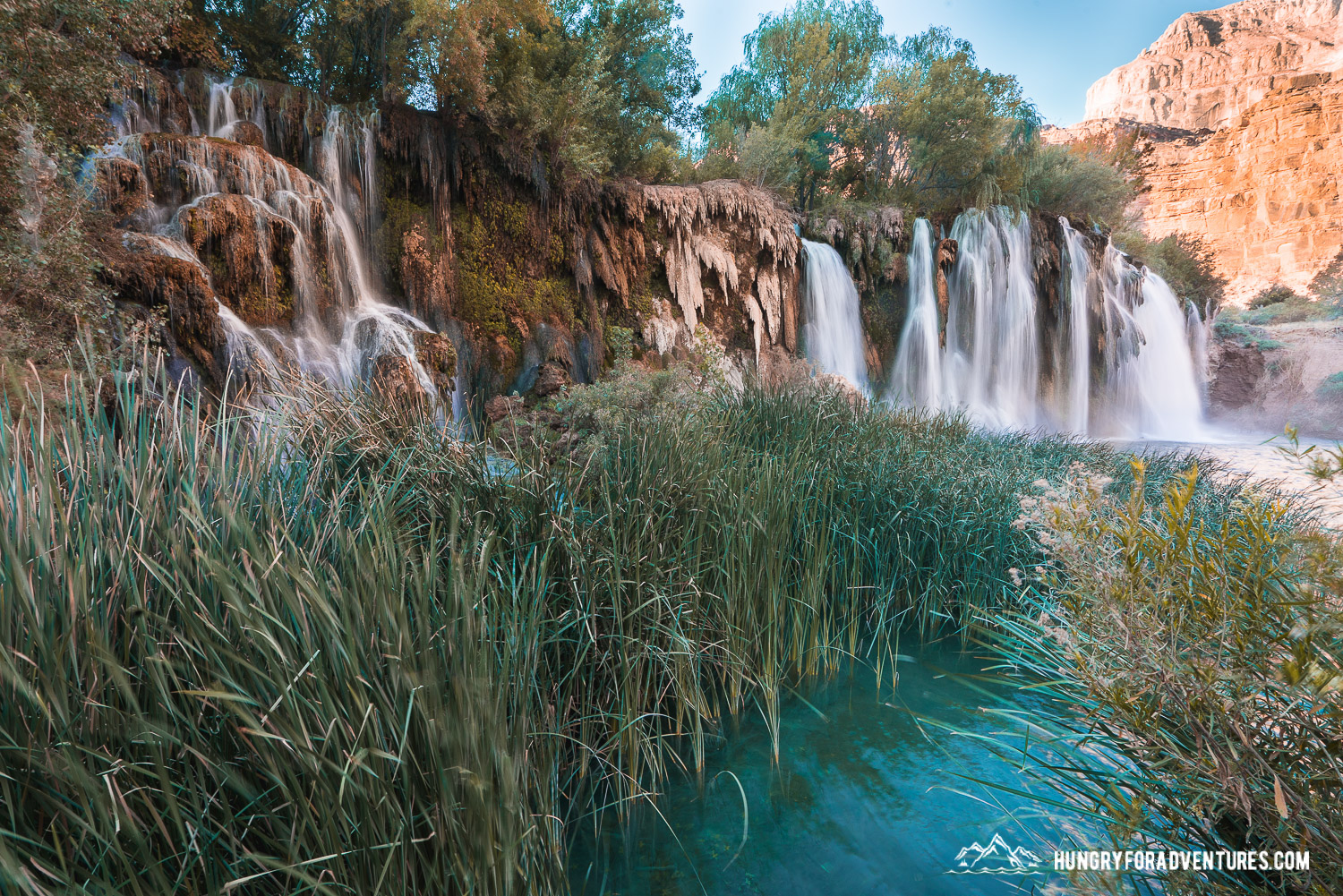
The morning of our departure from Havasupai, we took a quick stop at Little Navajo Falls and Fifty Foot Falls. It’s amazing how much plants have grown since last year.
How to Get a Havasu Falls Permit
Getting a Havasu Falls permit is the absolute hardest task of anyone’s Havasu Falls trip. If you somehow got your reservations punched in, you have done what most could not as the tribe only allow 300 campsites on any day. The office phone lines are constantly busy. I suggest trying to call first thing in the morning when the lines open up. If you are going with a group, make sure everyone participates to get reservations. Know the exact dates that you want to be in the area – the odds of you being able to call back and change your dates are even slimmer.
Reservations open up on February 1st of every year. Be ready to call, because available dates fill up fast for the entire year. I do suggest checking in with the office every week to see if people canceled. This doesn’t happen often, but I was able to get my group a reservation after someone canceled in 2013.
If the campgrounds are not available, you can also opt for the lodge. It’s more away from Havasu Creek and the waterfalls, but it’s better than not going.
Placing Your Reservation for Havasu Falls
Most people call in the Havasupai office to place their reservation. The phone lines operate from 9 am to 3 pm from Monday through Friday. A reservation number will be given to you. Make sure you write it down since it will be hard to have another call through the office again. Emails are also inefficient to use as it seems that the office staff never respond.
You also want to have your credit card available. The payment is due at the initial reservation for the whole group. Only 1 card can be used per group.
Camping Phone Number: (928) 448-2121, (928) 448-2180, (928) 448-2237, or (928) 448-2141
Lodging Phone Number: (928) 448-2111
Surprisingly, the tribe announced that they opened up an online reservation through a partner website. As of 2017, the online reservations are available on February 2nd.
CLICK HERE FOR ONLINE RESERVATIONS
Havasu Falls Fees
Havasu Falls fees apply to every individual. The entrance fee is for the overall stay. The camping fee is per night at the campgrounds. Know when your dates are because refunds are not given.
Native Americans with a valid Tribal ID used to be exempt from the fees. As of 2017, a valid Tribal ID will be granted a 25% discount to the full price.
Camping Fee: $25 per night, per person
Havasupai Entrance Fee: $50 per person
Environmental Fee: $10 per person
Tax: 10% tax
Lodge Fee: $145 per night for 4 persons
Lodge Deposit: $145 per room, per night
Havasupai Entrance Fee: $40
Tax: 10%
*You can get a full refund for lodges 2 weeks prior to your reservation.

GETTING TO HAVASU FALLS
To get to Havasu Falls, you must first make your way to the Hualapai Hilltop parking area. Phoenix, Arizona and Las Vegas, Nevada are the two closest metropolia. If you’re flying into the area, you will need to go to Sky Harbor International Airport in Phoenix or McCarran International Airport in Las Vegas and then drive down to the Hualapai Hilltop parking area. I’m from the Phoenix area so I have always driven from Phoenix, but the drive from Las Vegas is shorter.
From both starting point, you will eventually get to Indian Rd 18. Be advised that there are a lot of potholes and cattle guards. If you’re driving at night, there are also tons of rabbits, deer, and squirrels that love to cross the road. There are also cows roaming in the area, and you definitely don’t want to hit one of those. Cows are usually kept to themselves on the grass so you usually don’t have to worry about them. A rabbit had unfortunately crossed paths with our SUV which caused some cosmetic damage (nothing compared to what happened to the rabbit though).
Phoenix Sky Harbor International Airport to Hualapai Hilltop parking lot
Las Vegas McCarran International Airport to Hualapai Hilltop Parking lot

THE HAVASU FALLS HIKE
The Havasu Falls hike is a moderately hard hike due to its distance. However, the trail is very easy to navigate. Hiking (backpacking) is the preferred method to getting to Havasu Falls because you get the entire experience. This will allow you to see different viewpoints and it is highly rewarding. Hiking starts at the Hualapai Hilltop parking lot where you will descend into Havasu Canyon. You can do the hike self-guided or through a tour guide. I highly suggest trying to just make the attempt as a self-guided hike because tour guides are overly priced. The trail is extremely easy to navigate, anyways.
The Havasu Falls hike starts at the Hualapai Hilltop parking lot. You will immediately descent about 1000 feet into Supai Canyon on a few switchbacks until you reach the wash. You’ll walk on the dry wash in the sun for 5 miles. There are a few areas with shade to rest at – use it to your advantage. It’s really hard to get lost, just follow the canyon until you see a sign that directs you towards Supai Village for another 2 miles. You’ll soon hear the flow of Havasu Creek, and the Village soon after. Check in at Supai Village then continue another 2 miles. You will pass 50-foot Falls, Little Navajo Falls, then Havasu Falls. From Havasu Falls, it’s just another half mile.
Elevation Change: -2400 feet
Hilltop (trailhead) to Havasu Creek: 6 miles
Havasu Creek to Supai: 2 miles
Supai to Campground: 2 miles
Campground to Beaver Falls: 3.5 miles
Beaver Falls to the Colorado River: 3.5 miles
Campground to Havasu Falls: 0.5 miles
Campground to Mooney Falls: 0.5 miles
*A Havasu Falls trip with the Colorado River included may require up to 40 miles of walking round trip.

From the official Havasupai website (Click to view)

CAMPING AND LODGING AT HAVASU FALLS
Havasu Falls camping will give you an experience that the amazing Havasu Falls has to offer. You will want to camp! Camping puts you in the middle of two of the major waterfalls, Mooney Falls and Havasu Falls. Both waterfalls are less than a mile away from the campgrounds. Havasu Creek is constantly flowing nearby if you can’t get enough of the blue-green waters.
Amenities at Havasupai Campgrounds:
- Outhouse restrooms are located at both ends of the campgrounds. These are the cleanest and non-smelling outhouses I have ever used! Toilet papers are restocked but sometimes not fast enough.
- The water spigot provides drinkable water for the entire campground. It’s located in the middle of the campgrounds, maybe closer to the beginning, but is constantly flowing. There are signs that will lead you to the water spigot. Just keep in mind that you are not allowed to wash yourself or dishes here. You can bring the water back to camp to do so.
- There are no trash deposits. Pack out what you pack in!
- Benches and picnic tables are limited around the area. You can get creative with a lot of the chopped wood that is laying around.
- Campfire at Havasupai is prohibited. Bring a camp stove.

RECOMMENDED PACKING LIST
Hiking to Havasu Falls will require a comprehensive gear list since it is a backpacking trip. For many, the trek down to Havasu Falls will serve as their first backpacking trip. This was the case for me in 2013. If this is your first backpacking trip, don’t stress out on buying the best. Although well worth its price, backpacking gear can be costly.
If you are not sure that you will ever go backpacking again, don’t worry about having the best gear! Because the Havasupai tribe offers their mules for transporting bags, your bigger bags and heavier items can be transported through their mules. Renting backpacking gear at your local hiking store is also an option.
Learn more about the packing list for Havasu Falls

TAKING THE HAVASUPAI HELICOPTER
Air transportation using the Havasupai helicopter is an option if you don’t want to bust your butt. You will be cutting 8 miles of trekking to the village using the helicopter. It only takes about 5-10 minutes of flight time from lift-off to landing, but waiting for your turn on the Havasupai helicopter may take the whole day. You will get a unique perspective of Havasu Canyon. The helicopters only fly on certain days and times so make sure your permit dates match if you plan on taking the helicopters.
Learn more about the Havasupai helicopter service and reservations

HORSES AND MULES AT HAVASU FALLS
There are two ways to getting a horse for yourself. You can ask the people that work for the village at the trailhead or the check-in office in the village. You can also ask the independent horsemen (they’re usually standing around at the beginning of the hilltop parking lot).
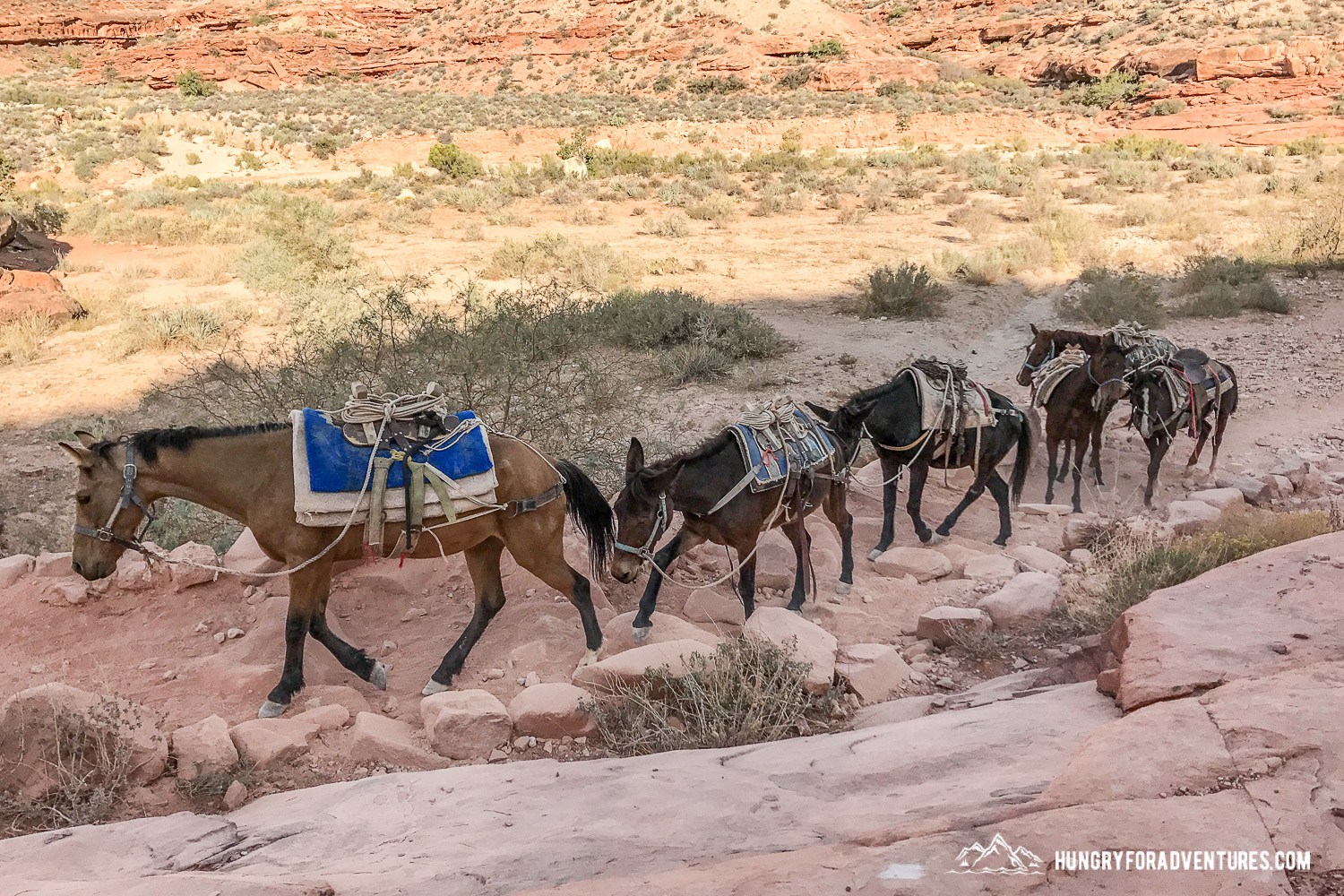
If you plan on bringing extra loads of food or just don’t want to carry your bags, pack mules are available for reservation. If you’re not used to backpacking and are not physically conditioned, taking the load off of your back could make your trip much more pleasant. You must remember that it’s not just 8 to 10 miles one way. You will be walking back and forth A LOT to visit each waterfall. Just keep in mind that there are weight restrictions on the pack mules.
Learn more about the Havasupai horses and pack mules